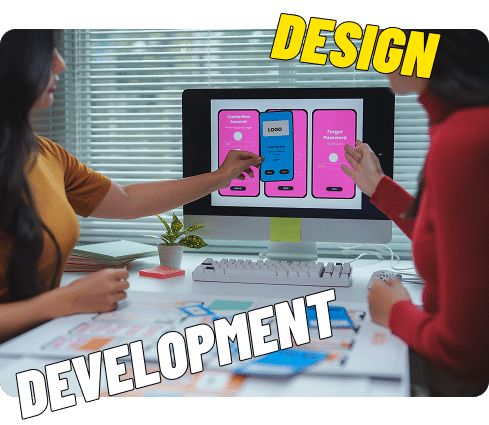
The Case for Saying No to Clients

The Case for Saying No to Clients

Sam

Lina Petrova

Feb 28, 2026 · 5 min read

The Case for Saying No to Clients

Early in my career, I believed that being a great agency meant saying yes to everything. The client wants a carousel on the homepage? Yes. They want to add a third typeface because the CEO saw it on another site? Of course. They want to launch without user testing because the board meeting is next Tuesday? We will make it work. I thought accommodation was professionalism. It took years — and a string of mediocre outcomes — to understand that the opposite is true.

Saying no to a client is not about power or ego. It is about protecting the work. When a company hires an agency, they are not paying for obedience — they are paying for judgment. They already have employees who will execute instructions without question. What they need from an outside partner is the willingness to challenge assumptions, surface blind spots, and defend decisions that serve the project even when those decisions are uncomfortable. The agencies that build lasting reputations are the ones whose clients trust them enough to disagree.

Why Saying No Is an Act of Service

There is a pattern we see with almost every new client relationship. In the first few weeks, there is a honeymoon period where both sides are eager to please. The client shares their vision, and the agency nods along, eager to seem collaborative. But real collaboration is not agreement — it is the willingness to push each other toward better outcomes. When we say no to a feature request, we are not rejecting the client’s input. We are saying: “We have seen this before, and we know where it leads. Let us show you a better path.”

Last year, a SaaS client asked us to redesign their pricing page. They came with a specific request: they wanted to display all twelve of their pricing tiers in a comparison table with every feature listed. The rationale was transparency — they wanted prospects to see everything they were getting. But the data told a different story. Their analytics showed that 83 percent of visitors bounced from the existing pricing page within eight seconds. The problem was not a lack of information. The problem was cognitive overload. We pushed back and proposed a simplified three-tier structure with a comparison toggle for users who wanted the details. The client was skeptical. We built both versions and ran an A/B test. The simplified version converted at nearly three times the rate. That result only happened because we said no to the original brief.

“The moment you stop challenging your clients is the moment you stop being useful to them. Agreement without conviction is just expensive compliance.”

Of course, there is an art to how you say no. Bluntness without context is just arrogance. When we push back on a request, we always pair the pushback with evidence: user research, analytics, competitive analysis, or precedent from past projects. We frame every disagreement as a shared problem to solve, not a battle to win. The language matters. Instead of “That won’t work,” we say “Here is what we have seen happen when teams take that approach, and here is what we would recommend instead.” The substance of the message is the same, but the framing preserves the relationship and opens the door to genuine dialogue.

Code

Building Trust Through Honest Feedback

Trust is not built by telling clients what they want to hear. It is built by telling them what they need to hear and being right often enough that they learn to rely on your perspective. The first time you push back, there will be friction. The second time, there will be less. By the third or fourth time — assuming your pushback has been validated by results — the dynamic shifts entirely. The client starts coming to you not for execution but for counsel. That is the inflection point where the relationship transforms from vendor and buyer into genuine partnership.

We have lost potential clients because of this approach. Some companies want a studio that will take their Figma file and build it without asking questions. That is a legitimate need, but it is not the service we provide. We are not in the business of making clients comfortable in the short term at the expense of their outcomes in the long term. Every time we say no, we are making a bet that the work will speak for itself — and so far, that bet has always paid off. The clients who stay are the ones who value the honesty, and those relationships tend to last for years. Saying no is not a risk to the relationship. Saying yes when you know better — that is the real risk.

Sam

Lina Petrova

Strategy Lead

Lina leads client strategy at Pxlcraft, turning business goals into clear creative briefs and measurable outcomes.

MORE FROM THE BLOG

Headless CMS: Hype or Future?

Headless CMS: Hype or Future?

Maren Solberg

Sam Okafor

Feb 20, 2026 · 5 min read

Every few years, the web development world produces a paradigm shift that promises to solve all the problems of the previous era. Responsive design replaced m-dot sites. Single-page applications replaced full-page reloads. And now, headless CMS architectures are being positioned as the inevitable successor to monolithic platforms like WordPress, Drupal, and Squarespace. The pitch is compelling: decouple your content from your presentation layer, deliver via APIs, and gain the freedom to build any front-end you want. But after implementing headless architectures on over twenty client projects, I have a more nuanced view. The answer to whether headless is the future is not yes or no — it is “it depends,” and the specifics of that dependency matter enormously.

To understand the appeal of headless, you need to understand what it is replacing. Traditional CMS platforms are monoliths — they manage content, render templates, handle routing, and serve pages all within a single system. WordPress is the canonical example: you write a post in the admin panel, and WordPress generates the HTML, applies the theme, and delivers the finished page to the browser. This coupling of content and presentation is convenient for simple sites, but it becomes a constraint as requirements grow more complex. Want to serve the same content to a website, a mobile app, and a digital kiosk? A monolith forces you to maintain three separate integrations with the same database, or worse, duplicate the content across three different systems.

The Case for Going Headless

The headless architecture solves the multi-channel problem elegantly. Your content lives in a centralized repository — Sanity, Contentful, Strapi, or any number of alternatives — and is exposed through a structured API. Your front-end applications consume that API and render the content however they see fit. A Next.js website, a React Native app, and an in-store display can all pull from the same content source without any of them dictating how the others should work. For organizations that genuinely need omnichannel content delivery, this is transformative.

The performance benefits are real as well. When your front end is a static site generated at build time — using frameworks like Next.js, Astro, or Nuxt — you are serving pre-rendered HTML from a CDN edge node, not waiting for a server to query a database and render a template on every request. The difference in time-to-first-byte can be dramatic: from 400-800 milliseconds on a typical WordPress installation to under 50 milliseconds on a CDN-cached static page. For content-heavy sites where SEO and Core Web Vitals matter, that performance gap translates directly into rankings and revenue.

“The right architecture is the one that serves the project’s actual needs, not the one that looks best on a conference slide. Technology choices should be boring in proportion to their importance.”

Developer experience is the third pillar of the headless argument. Front-end engineers can work in the frameworks and toolchains they know best, without being constrained by the CMS’s templating language or deployment workflow. A React developer does not need to learn PHP to build a WordPress theme. A Vue developer does not need to understand Twig to work with a Craft CMS project. The decoupling liberates both the content team and the development team to use the tools that make them most productive, with the API contract as the only point of coordination between them.

Code

When Traditional Still Wins

Here is where the nuance comes in. Not every project needs omnichannel delivery. Not every client has the budget for a custom front-end build. And not every content team has the technical sophistication to work comfortably in a headless environment where the preview experience is inevitably less polished than a traditional CMS’s WYSIWYG editor. For a local business that needs a five-page marketing site with a blog, recommending a headless architecture with Sanity, Next.js, and Vercel is not engineering excellence — it is over-engineering. The complexity tax is real: more moving parts means more points of failure, more deployment steps, and a higher knowledge floor for the client’s internal team to maintain the site after handoff.

We have seen projects where the headless approach was chosen for its resume value rather than its fitness for purpose. A marketing team that publishes three blog posts a month does not need an API-first content infrastructure. A nonprofit with a volunteer web committee does not need to understand webhooks and build triggers. In these cases, a well-built WordPress or Webflow site will serve the client better for years, with lower hosting costs, simpler content management, and a vastly larger pool of freelancers who can maintain it when the original team moves on.

Our recommendation at Pxlcraft is pragmatic rather than ideological. We evaluate each project against three criteria: the number of content delivery channels, the performance requirements, and the client’s long-term maintenance capacity. If a project scores high on all three, headless is almost certainly the right call. If it scores high on only one, a modern traditional CMS — or even a hybrid approach like WordPress with a headless front end for key pages — may be the smarter investment. The future of content management is not headless or traditional. It is choosing the right tool for the right job, and having the engineering maturity to know the difference. The best architecture is the one your team can ship, maintain, and evolve without you.

Maren Solberg

Sam Okaf

Lead Engineer

Sam oversees Pxlcraft’s engineering practice, specializing in modern web architectures and performance optimization.

MORE FROM THE BLOG

Typography Rules We Break on Purpose

Typography Rules We Break on Purpose

Yuki

Yuki Tanaka

Mar 14, 2026 · 4 min read

There is a quiet irony at the heart of the design profession: the better you do your job, the less anyone notices. A door handle that fits perfectly in the palm. A checkout flow that feels like a single thought. A typeface that carries meaning without drawing attention to its own letterforms. The best design operates below the threshold of conscious awareness, guiding behavior so naturally that the user never stops to wonder why things work the way they do.

This is not a new idea. Dieter Rams understood it when he wrote his ten principles for good design in the late 1970s. Principle ten — “Good design is as little design as possible” — is often quoted but rarely internalized. In an industry that rewards novelty and spectacle, restraint can feel like a career risk. Clients want to see what they are paying for. Designers want to show range. The temptation to make things visually loud is constant, and it takes genuine discipline to resist it.

The Paradox of Good Design

The paradox is this: design that calls attention to itself is often design that has failed. A navigation system that makes you pause to figure out how it works. A clever animation that delights the first time and annoys by the fifth. A layout so unconventional that the content becomes secondary to the container. These are symptoms of design that prioritizes the designer’s ego over the user’s needs. And in the commercial world, ego-driven design has real costs — higher bounce rates, lower conversion, frustrated customers who go elsewhere without articulating why.

At Pxlcraft, we have a phrase we use in critiques: “Is this for us or for them?” It is a simple question, but it cuts through a lot of noise. Every decorative gradient, every micro-interaction, every typographic flourish needs to justify its existence not by how it looks in a portfolio, but by how it serves the person on the other side of the screen. Sometimes the answer is that the flourish genuinely helps — it creates hierarchy, provides feedback, or builds emotional resonance. But more often than you would expect, the honest answer is that it is there because the designer wanted it to be.

“The best interfaces feel like an extension of your own thinking. You don’t admire them — you simply accomplish what you came to do.”

Consider the apps you use every day without thinking about them. Your weather app, your banking app, your messaging platform. The ones that have become invisible to you are the ones that work. You open them, you get what you need, you move on. There is no friction, no confusion, no moment where the interface demands interpretation. That seamlessness is not the absence of design — it is the presence of extraordinary design, the kind that requires deep user research, relentless iteration, and the humility to throw away ideas that look beautiful but do not perform.

WEB DESIGN & DEVELOPMENT

Designing for Disappearance

Designing for disappearance requires a different mindset than designing for awards. It means starting with user flows instead of mood boards. It means spending more time in usability testing than in Figma. It means accepting that your most impactful contribution might be removing an element rather than adding one — killing that sidebar, simplifying that form, reducing a five-step process to two steps. Subtraction is harder than addition because every element you remove forces you to prove that the remaining elements can carry the full weight of the experience.

There is a practical methodology here, not just a philosophy. We start every project by mapping the critical user journeys and identifying the moments of highest friction. Then we design the simplest possible solution for each friction point and test it before adding any layer of visual polish. The polish comes last, and it comes in service of clarity — a color that signals a state change, a shadow that creates depth and hierarchy, a transition that smooths an otherwise jarring context switch. Every aesthetic decision is tethered to a functional purpose.

The reward for invisible design is not applause — it is loyalty. Users who never think about your interface are users who never think about leaving. They form habits around your product, not because you dazzled them, but because you made their lives fractionally easier in a way that compounds over time. That is the highest compliment a designer can receive: not “what a beautiful website,” but “I don’t even remember the last time I had a problem with it.” Invisibility is not the absence of craft. It is its ultimate expression.

Yuki

Yuki Tanaka

Creative Director

Yuki leads Pxlcraft’s design practice, bringing 14 years of experience in brand identity and digital product design.

MORE FROM THE BLOG

How We Hire Without Job Postings

How We Hire Without Job Postings

Eric

Erik Lindström

Feb 8, 2026 · 5 min read

The Case for Saying No to Clients

Early in my career, I believed that being a great agency meant saying yes to everything. The client wants a carousel on the homepage? Yes. They want to add a third typeface because the CEO saw it on another site? Of course. They want to launch without user testing because the board meeting is next Tuesday? We will make it work. I thought accommodation was professionalism. It took years — and a string of mediocre outcomes — to understand that the opposite is true.

Saying no to a client is not about power or ego. It is about protecting the work. When a company hires an agency, they are not paying for obedience — they are paying for judgment. They already have employees who will execute instructions without question. What they need from an outside partner is the willingness to challenge assumptions, surface blind spots, and defend decisions that serve the project even when those decisions are uncomfortable. The agencies that build lasting reputations are the ones whose clients trust them enough to disagree.

Why Saying No Is an Act of Service

There is a pattern we see with almost every new client relationship. In the first few weeks, there is a honeymoon period where both sides are eager to please. The client shares their vision, and the agency nods along, eager to seem collaborative. But real collaboration is not agreement — it is the willingness to push each other toward better outcomes. When we say no to a feature request, we are not rejecting the client’s input. We are saying: “We have seen this before, and we know where it leads. Let us show you a better path.”

Last year, a SaaS client asked us to redesign their pricing page. They came with a specific request: they wanted to display all twelve of their pricing tiers in a comparison table with every feature listed. The rationale was transparency — they wanted prospects to see everything they were getting. But the data told a different story. Their analytics showed that 83 percent of visitors bounced from the existing pricing page within eight seconds. The problem was not a lack of information. The problem was cognitive overload. We pushed back and proposed a simplified three-tier structure with a comparison toggle for users who wanted the details. The client was skeptical. We built both versions and ran an A/B test. The simplified version converted at nearly three times the rate. That result only happened because we said no to the original brief.

“The moment you stop challenging your clients is the moment you stop being useful to them. Agreement without conviction is just expensive compliance.”

Of course, there is an art to how you say no. Bluntness without context is just arrogance. When we push back on a request, we always pair the pushback with evidence: user research, analytics, competitive analysis, or precedent from past projects. We frame every disagreement as a shared problem to solve, not a battle to win. The language matters. Instead of “That won’t work,” we say “Here is what we have seen happen when teams take that approach, and here is what we would recommend instead.” The substance of the message is the same, but the framing preserves the relationship and opens the door to genuine dialogue.

Code

Building Trust Through Honest Feedback

Trust is not built by telling clients what they want to hear. It is built by telling them what they need to hear and being right often enough that they learn to rely on your perspective. The first time you push back, there will be friction. The second time, there will be less. By the third or fourth time — assuming your pushback has been validated by results — the dynamic shifts entirely. The client starts coming to you not for execution but for counsel. That is the inflection point where the relationship transforms from vendor and buyer into genuine partnership.

We have lost potential clients because of this approach. Some companies want a studio that will take their Figma file and build it without asking questions. That is a legitimate need, but it is not the service we provide. We are not in the business of making clients comfortable in the short term at the expense of their outcomes in the long term. Every time we say no, we are making a bet that the work will speak for itself — and so far, that bet has always paid off. The clients who stay are the ones who value the honesty, and those relationships tend to last for years. Saying no is not a risk to the relationship. Saying yes when you know better — that is the real risk.

Eric

Erik Lindström

Creative Director

Erik leads Pxlcraft’s design practice, bringing 14 years of experience in brand identity and digital product design.

MORE FROM THE BLOG